
The 67th Annual Grammy Awards consisted of a diverse list of musical talent, battling for arguably one of the highest recognitions to receive in the music industry. Ranging from some of the most popular genres of music including pop, dance/electronic, rock, metal, alternative, rap, r&b, country, classical, and many more. This presentation featured a pristine collection of artists part of the LGBTQIA+, Latinx, and BIPOC communities. DEI at The Grammys was clearly a significant focus this year.
BIPOC Representation at The Grammys
We cannot talk about BIPOC representation if we don’t talk about Doechii and the words of wisdom she shared in her speech. Presented by Cardi B, the only other woman alongside Doechii and Lauryn Hill, who has won this award previously, Doechii wins the Grammy for Best Rap Album at the 67th Annual Grammy Awards.
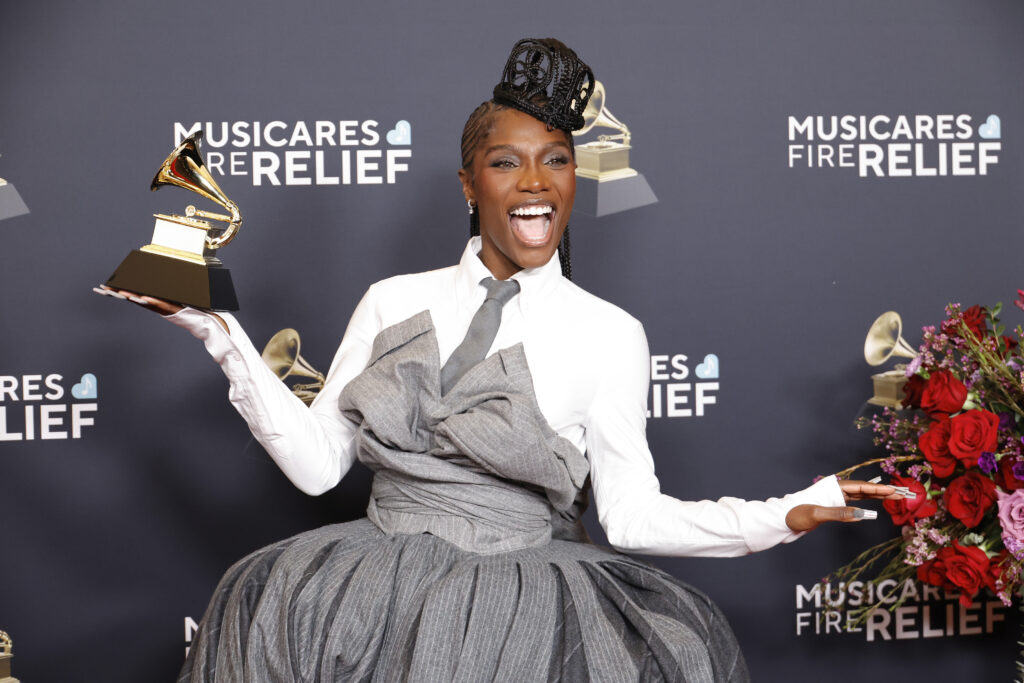
Doechii receiving her award from Cardi B: watch here.
Speaking over tears and smiles from ear to ear, comforted by her mother behind her, Doechii shares that she dedicated her sobriety and faith in God to this achievement she has now accomplished. Reminding labels that they need to go to Tampa, Florida (where she’s from) to
look for talent.
Doechii says thank you to hip-hop, and proceeds to jerk tears from all the little Black girls in the country with these simple words:
“I know that there is some Black girl out there, so many Black women out there that are watching me right now, and I want to tell you: you can do it. Anything is possible. Anything is possible. [Doechii points to both sides of the crowd. Looks directly into the camera].
Don’t allow — don’t allow anybody to project any stereotypes on you, that tell you that you can’t be here, that tell you that you are too dark or that you’re not smart enough or that you are dramatic or too loud. You are exactly who you need to be, to be right where you are, and I am a testimony.
Praise God.”
— Doechii
DOECHII’S SPEECH: watch here.
Black Excellence: Happy Black History Month at The Grammys
After bringing me (a fellow Black girl following her dreams) and all the other Black girls around the world to tears with her speech, we are soon presented with a tribute to Quincy Jones, 28-time Grammy Award-winning producer, composer, conductor, recording artist, and artist of many hats.
This stellar influential being and guide in this industry also derives from African-American descent. His expertise, leadership, and success in this industry did not go unnoticed that night.
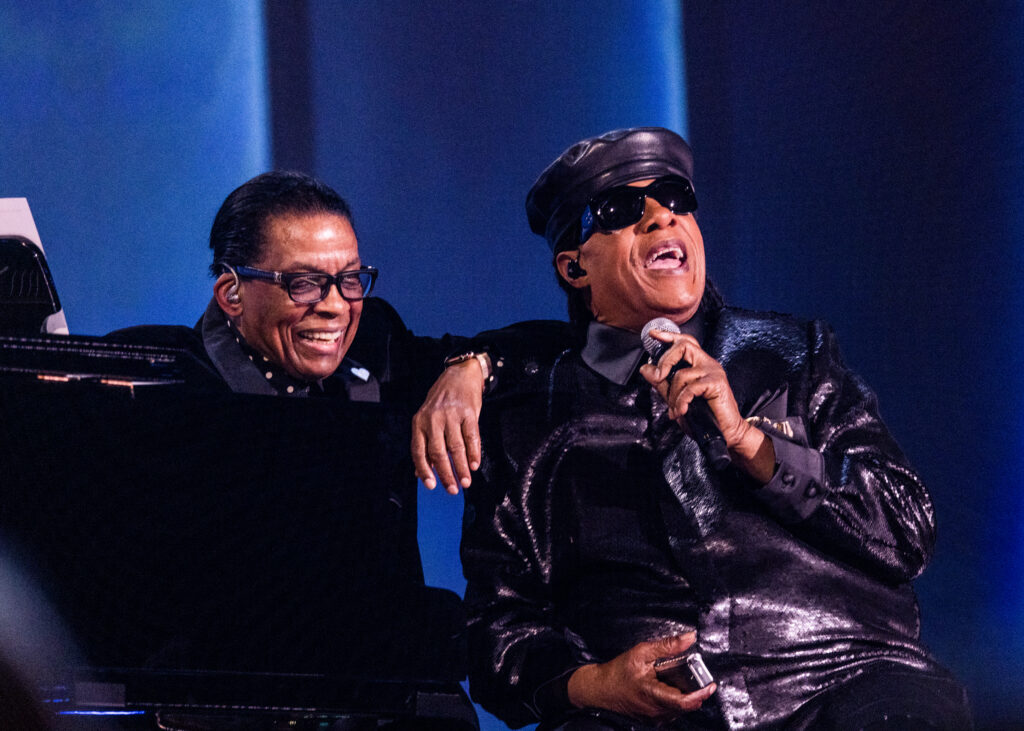
There were performances from Cynthia Erivo (Herbie Hancock; piano), Stevie Wonder (Herbie Hancock; piano), and Lainey Wilson & Jacob Collier. The tribute displayed a beautiful presentation of Quincy Jones’ Black excellence and contributions to the legacy of the music industry.
LGBTQIA+ Community Representation at The Grammys
In addition to BIPOC recognition in this space, there was also Chappell Roan and honorable mention, Clairo, who represent the LGBTQIA+ communities. Clairo is a queer artist that has seized the love of the internet over the past couple of years through her indie alternative sound, bedroom pop melodies, and sweet vocals as the cherry on top. It is no surprise she has been nominated for a Grammy this year, as her songs have reached a wide new world of listeners via the internet.
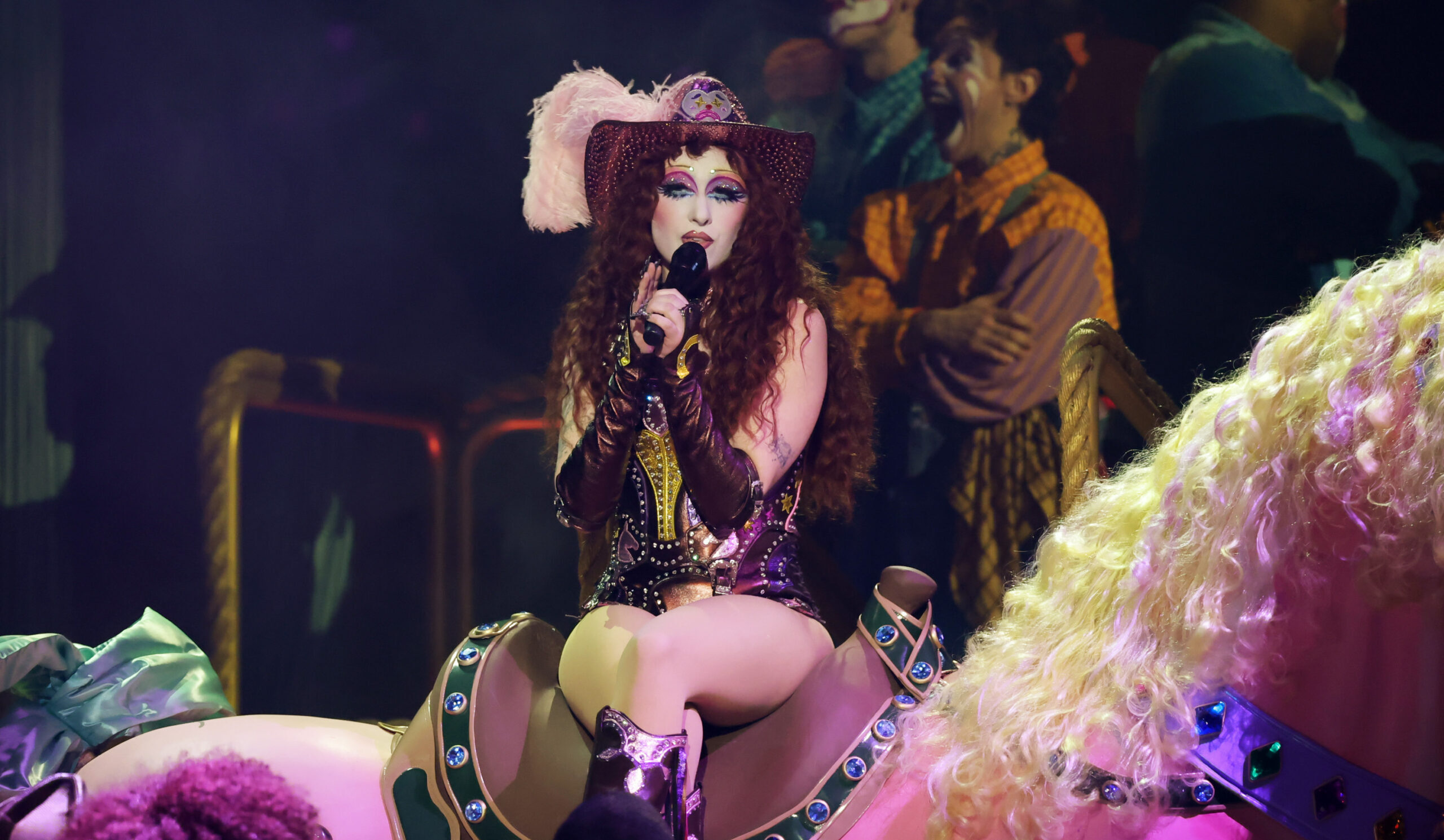
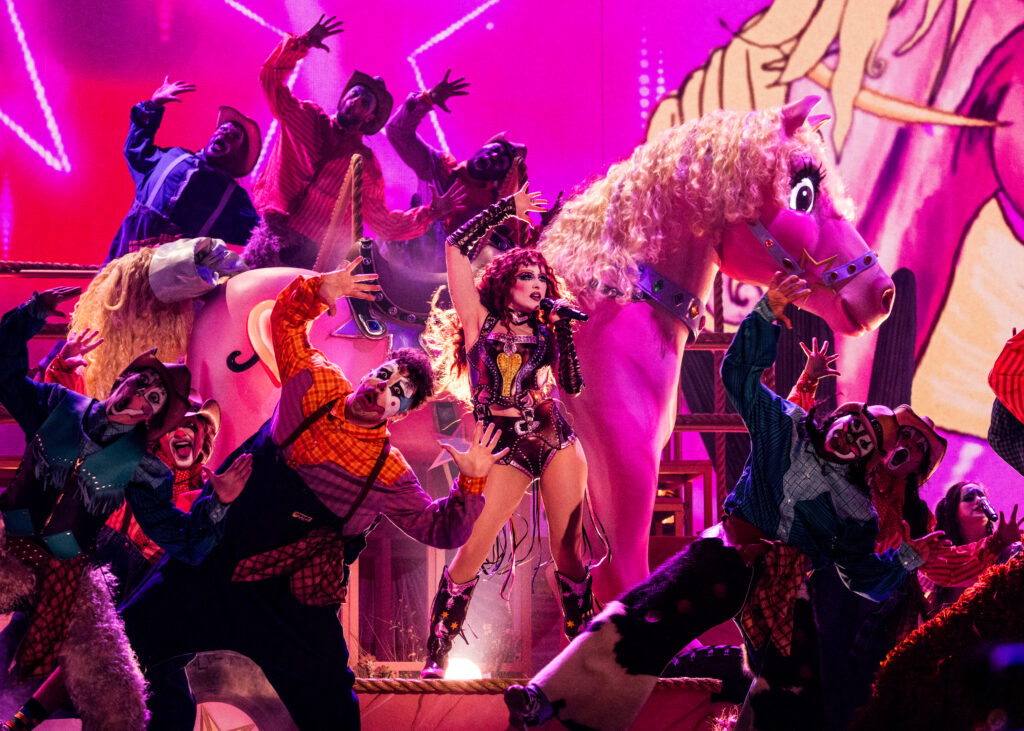
Chappell Roan had the opportunity to perform “Pink Pony Club” at the Crytpo.com arena this year. The stage was glazed with large bedazzled pink ponies, Chappell Roan dressed in a drag-inspired get-up, her fiery red locks swinging in all directions, and dancers dressed as
eclectic cowboy and cowgirl clowns wearing all kinds of blues, oranges, and plaid color ways. Chappell Roan is known for being such a powerful force in the queer community.
Watch the crowd sing “Pink Pony Love” during Chappell Roan’s performance, here.
She gives her public respect for all she has learned and grown within the LGBTQIA+ space in Los Angeles, as a girl coming from a small town in southwest Missouri.
Chappell Roan on Artists’ Healthcare Rights
CHAPPELL ROAN: “I grew up in southwest Missouri, in a small town, called Willard. I felt very isolated. I felt like I was never good enough because I was gay. I think my younger self needed a girl like me to look up to. ‘Pink Pony Club’ is my love letter to L.A. I love this city. I love that L.A. gave me the courage to be myself, because ultimately, it is where I feel the most free.”
She speaks up loudly, and proudly, about pressing concerns in her community. When Roan received her Grammy for Best New Artist, she walks up, journal in hand, crying and smiling at the same time. After thanking her peers, listeners, family, and record labels, she dives deep into her journal during her speech, whilst putting her Grammy on the stage to speak her message.
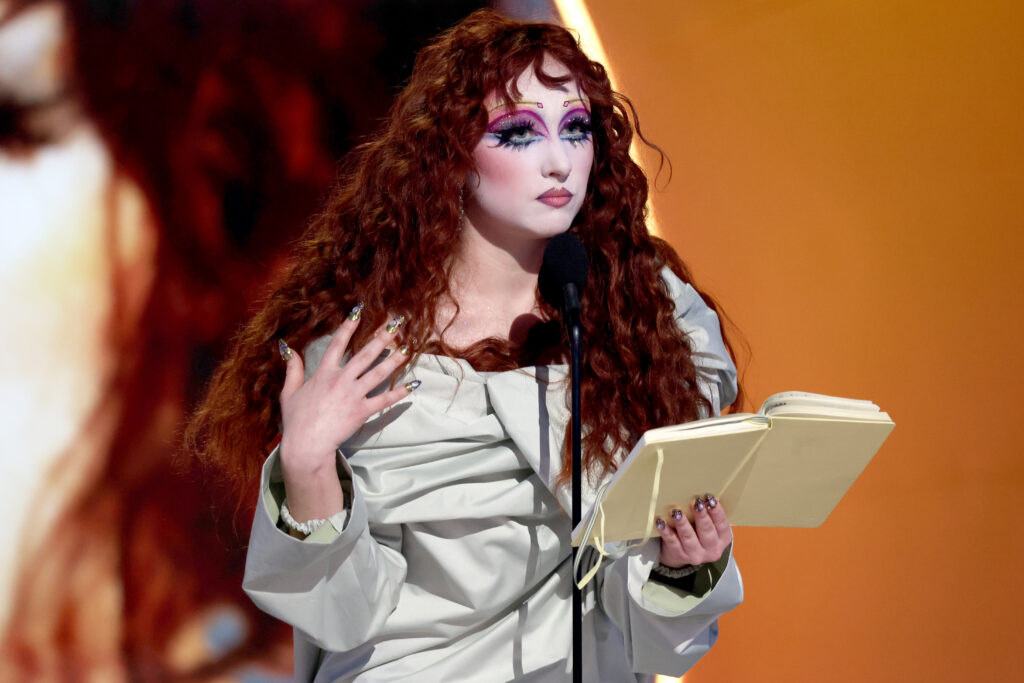
CHAPPELL ROAN: “I told myself that if I ever won a Grammy and got to stand up here before the most powerful people in music, I would demand that labels, and the industry, profiting millions of dollars off of artists esp [especially] — would offer a live-able wage and healthcare for especially to developing artists. Because…
[Camera pans to Sabrina Carpenter, Doechii looking with bright eyes and applauding, Benson Boone applauds and stands up]
… I got signed so young. I got signed as a minor, and when I got dropped I had zero job experience under my belt, and like most people, I had a difficult time finding a job in the pandemic and could not afford health insurance. It was devastating to feel so committed to my art and feel so betrayed by the system and dehumanized to have — to not have health —
[Roan cuts off briefly as she puts her
Grammy on the ground and spreads her journal open with both hands as she continues to read]. Not have stammers]— if my label had prioritized artist health, I could have been provided care by a company I was giving everything to. Record labels need to treat their artists as valuable employees with a live-able wage and health insurance and protection.
Labels, we got you, but do you got us?
[Chappell Roan, looking around and directly at cameras].
Thank you.”
Watch Chappell Roan’s entire celebration speech here.
Latinx Representation at The Grammys
Last but not least, it is all eyes on Shakira… and Jennifer Lopez! Two women of Latinx communities who have earned success through their musical expertise and sharing their rich culture with the world. Jennifer Lopez is invited to present the award for Best Latin Pop Artist,
and Shakira wins the Grammy for Las Mujeres Ya No Lloran.
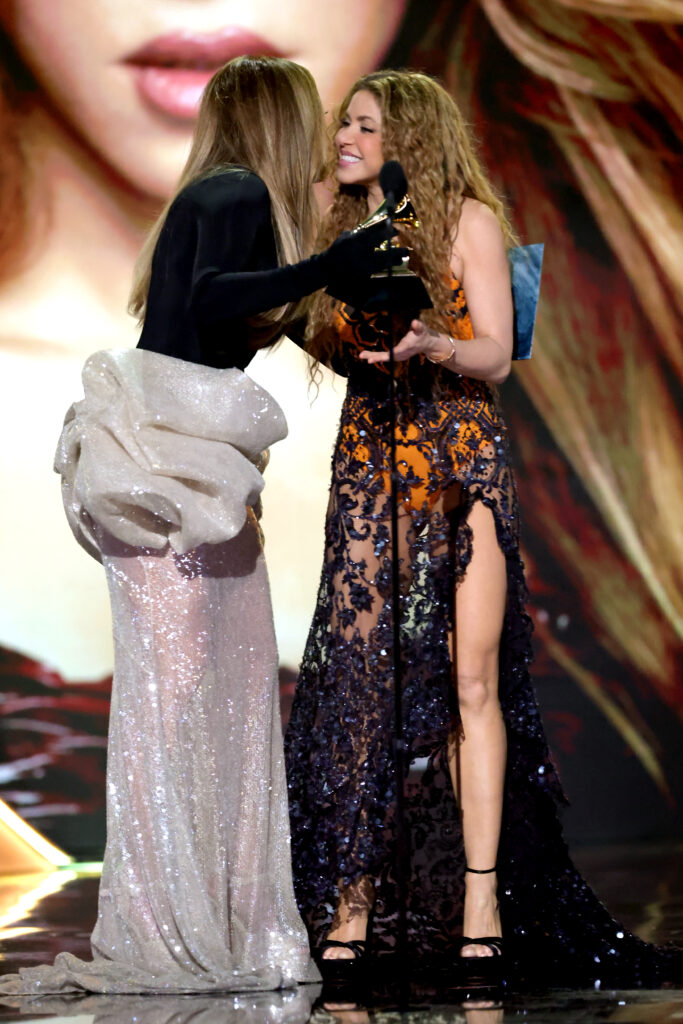
Jennifer Lopez: “LOS ANGELESSSS! Here is the truth. In any language, music’s biggest night only gets bigger and better when it brings us a whole world of music.”
Absolutely, J.Lo. We have loved the representation shown this year at the Grammys as well as the worldwide integration of new cultures through music.
Shakira Speaking Up for Immigrants
Shakira walks up to receive her award.
“I want to dedicate this award to all my immigrant brothers and sisters in this country. You are loved. You are worth it. And I will always fight with you. And to all of those women who work really hard everyday to provide for their families, you are the true She-Wolves. So this is for you too.
And I want to share this award with my kids. Mila and Sasha who are here with me. I am so proud of you guys, of your kind hearts. Thank you so much for supporting me the way that you do. I love you.”
— Shakira
Before Shakira’s outstanding Grammy performance, she is introduced by Gloria Estefan (8-time Grammy winner and Cuban-American singer and actress). Gloria takes a moment on the stage to speak on the diversity at the Grammys and how far this industry has come since she has been making music.
Estefan Sheds Light on the Latin Grammy Awards
Gloria Estefan: “25 years ago the Latin Recording Academy created the first-ever Latin Grammy Awards which I was honored to co-host and for a quarter-century now it’s been an important show, giving so many Latin artists a chance to shine in the Grammy spotlight.
Yes, that deserves applause.
[Pauses for applause]
Gloria Estefan: “Yes so many. One of those artists who has always shined the brightest is our next performer. Twenty-five years ago, I had the honor of introducing her to America, and collaborating with her, so this is a real full circle moment. She’s a 15-time Latin Grammy Winner, a 4-time Grammy Winner, and a winner tonight, for Best Latin Pop Album. And in any language, she is a global superstar, here is a closer look at the singular story of the one and only La incomparable Shakira.
Shakira: “Looking back on my past and my career, I wouldn’t change anything, all the struggles that I had to go through in order to get my music played on American radio, I see that now it’s not as hard for Spanish artists to be heard. It makes me happy to have been a part of that process.Seven years have passed since my last album. When I wrote this album I was going through my separation, but that wasn’t the only loss I was experiencing. Everything that I always feared would happen to me, happened to me.
I had to find a way to put myself back together, and music played a super important role to transform all the pain and the anger into something precious. So it was a way of almost seeing my tears become diamonds.”
Watch Shakira receive her award for Best Latin Pop Album, here.
Shakira is undeniably one of the icons of this generation in Latin music. It was such a pleasure to see her get recognized and hear more about her journey in music. Her groundbreaking journey has inspired Latinx artists from all over the world, and she has created the path for them
to continue introducing the world to their unique sound.
Trans People Are Not Invisible
We must note Lady Gaga’s representation for the transgender community on such a large stage. Upon receiving her and Bruno Mars’ Grammy for Best Pop Duo/Group Performance, she thanks Bruno Mars and begins to share what’s on her heart:
“Bruno you are an incredible human being, you are a musician for the ages. I don’t know music without Bruno.
[Gaga exhales deeply]
Michael, I love you so much, all your support and love every single day [deep exhale] it is a privilege to be a songwriter and a producer and a musician. It’s such an honor to sing for all of you. And I just want to say tonight that trans people are not invisible. Trans people deserve love. The queer community deserves to be lifted up.
Music is love. Thank you.”
— Lady Gaga
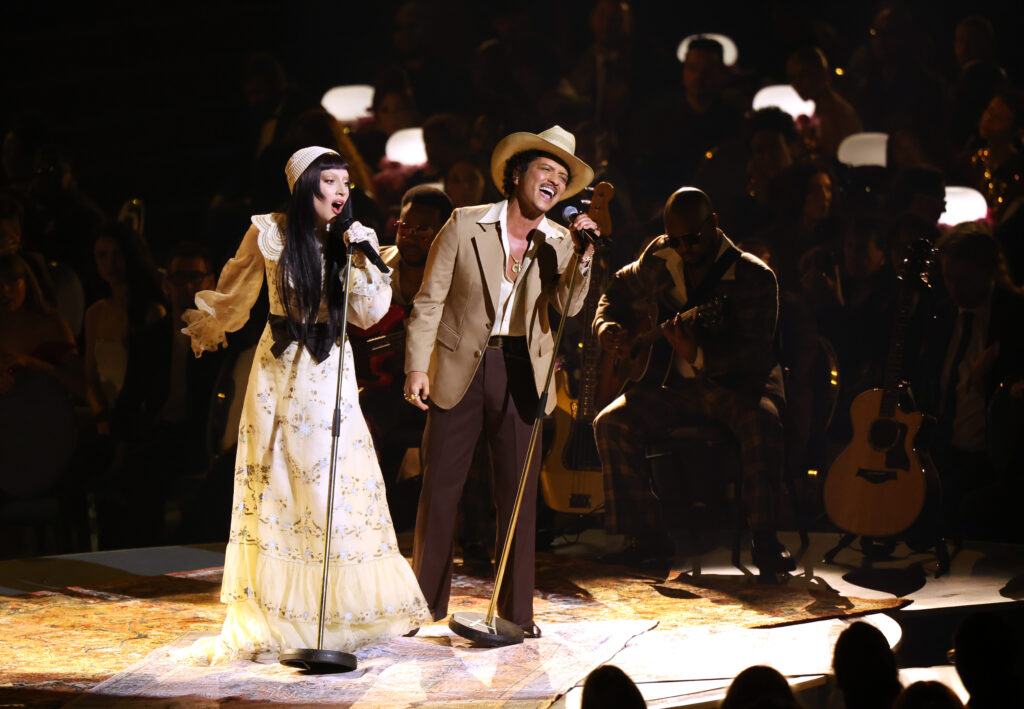
Lady Gaga has been a driving force in the queer and transgender LGBTQIA+ communities throughout her career. She is another artist who uses her voice boldly and stands on business about what she believes in.
Shout out Gaga.
The Significance of DEI at the Grammys
This year’s nominees and winners were vocal about the messages on their hearts at this time. Especially those regarding diversity, equity, inclusion (DEI) concerns, culture, and paving the road for those to come. Including these talented artists from all walks of life and the world, open us up to their world, their culture, and their experiences. DEI within creative spaces allows for a completely original and unique production, as we’ve seen with this year’s presentation of the Grammys.
This is how we learn more about each other and connect as humans. Music brings us together, and the 67th Annual Grammy Awards was the reminder we needed.